Key Highlights –
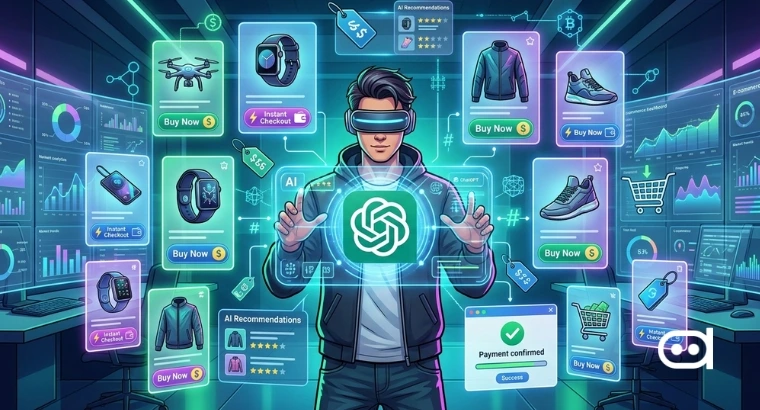
- OpenAI has launched a visual product discovery experience in ChatGPT, rolling out this week to all Free, Go, Plus, and Pro users. The feature allows them to compare products side-by-side as well as execute image-based search, and conversational refinement of results
- Seven major retailers including Target, Sephora, Best Buy, and Wayfair are live on the Agentic Commerce Protocol (ACP), an open standard co-developed with Stripe that feeds merchant catalog data directly into ChatGPT
- Simultaneously, OpenAI is walking back Instant Checkout – its direct in-app purchasing feature launched in September 2025, citing a lack of flexibility, and returning checkout control to merchants
ChatGPT has had a shopping function for a while. What OpenAI shipped this week is a meaningful upgrade to how it looks and works with products. This includes side-by-side comparisons, image uploads to find similar items, and fresher catalog data pulled directly from participating merchants. The rollout covers all tiers, not just paid subscribers. For most users, the practical change is that product research that previously sent you across multiple tabs can now stay inside a single conversation thread.
That is the feature. The more interesting development is what OpenAI admitted in the same announcement.
The Instant Checkout Retreat
In September 2025, OpenAI launched Instant Checkout which was a direct in-app purchasing flow starting with Etsy and Shopify merchants, with OpenAI collecting a fee on completed transactions. The model positioned ChatGPT as a marketplace layer sitting between users and retailers, handling discovery and purchase in one place.
Six months later, OpenAI is explicitly deprioritising it. The company stated in its March 24 blog post that the initial version of Instant Checkout “did not offer the level of flexibility” it aimed to provide. Merchants are now encouraged to run their own checkout experiences. ChatGPT handles discovery and hands off. OpenAI has not stated whether the retreat was driven by merchant pushback, structural limitations, or both.
This is a notable course correction. Why? Well because the original Instant Checkout pitch was about keeping users inside ChatGPT through the full purchase journey. Now, the new model makes ChatGPT a referral layer, which is valuable for discovery, but not capturing the transaction itself.
Also read: OpenAI Is Shutting Down Sora & the Disney Deal With It
What ACP Actually Is
The Agentic Commerce Protocol is the infrastructure layer underpinning this update. Co-developed with Stripe and open-sourced from launch, ACP lets merchants feed structured product data such as catalog listings, pricing, inventory signals, promotions, directly into ChatGPT without relying on web scraping or static training data. This addresses one of the most practical weaknesses of AI shopping tools i.e. outdated or inaccurate product information.
Seven retailers which are live on ACP for discovery are Target, Sephora, Nordstrom, Lowe’s, Best Buy, The Home Depot, and Wayfair. Shopify merchants are included automatically through Shopify Catalog, eliminating requirement of any individual integration. With this millions of Shopify storefronts are now findable in ChatGPT without any action from the merchant.
Walmart has gone further. The retailer has built a full in-ChatGPT app experience that supports account linking, loyalty, and Walmart payments all of which is now available now on the website, with iOS and Android following soon after. It is the clearest signal of what the platform looks like when a major retailer negotiates its own presence rather than simply feeding a catalog into OpenAI’s system. That distinction matters for what comes next: merchants with the leverage to build their own ChatGPT app will shape the experience on their terms. Those without it will participate on OpenAI’s.
What This Means for Users and the Industry
For users, the update is straightforwardly useful. Product comparisons are faster, results are more current, and image-based search adds a practical way to find items you can describe visually but not by name.
The merchant-side question is less straightforward. ACP is positioned as an open standard, but OpenAI controls what surfaces in ChatGPT, how it ranks, and on what terms merchants participate. Walmart’s deeper integration suggests the most commercially significant retailers will negotiate a presence layer, not just catalog inclusion. Smaller merchants, particularly those without the leverage to build their own ChatGPT app, are participating on terms they do not set. Whether ACP’s open-source status provides meaningful counterweight to that dynamic is a question the protocol’s early adoption period will start to answer.