Richard Yu – the Chairman of the Huawei Consumer Business Group Unit and the Product Investment Review Committee, shared big news today on the mobile satellite communication technology. It seems the company will soon open a new chapter in this subject for the benefit of its users.
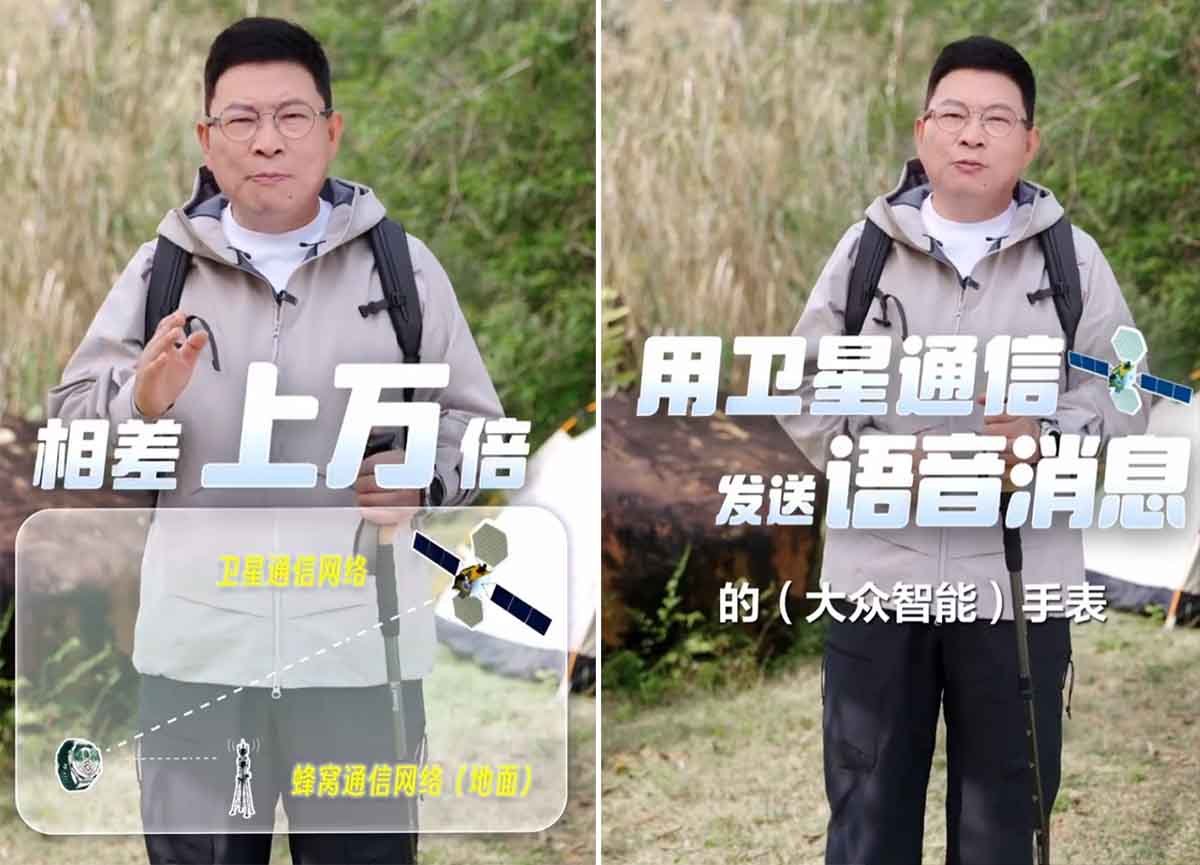
Huawei’s chief dropped a new video on Weibo asking an interesting question to its smartphone users: Can satellite communication only be used for emergencies?
The Chairman question pointed towards new Huawei breakthroughs in the mobile satellite communication technology. The OEM can seemingly bring more features related to this part for its smartphones and wearables.
Yu explained how existing mobile networks used to cover less than 20% of the world. Despite evolving technologies, smartphone still struggles for a better network plan.
But thanks to the mobile satellite communication, which efficiently solves this bottleneck. It not only works proactively in big cities but also in many remote areas that have been facing network issues for years. Yu says that the mobile satellite tech is the key to building a global network connection without dead zones.
And here’s the big news: Richard Yu stated that mobile satellite features are now available even for pocket-friendly handsets + wearables. It is no longer limited to flagships like Mate and Pura or the high-end Nova smartphone variants.
“Mobile satellite communication is now available in budget smartphones and smartwatches, and is gradually becoming a standard feature of smart devices.”

(Image Credits: Huawei)
It means more Enjoy phones will receive satellite communication tech in the future. The chief added that satellite communication will cooperate with terrestrial networks to cover more devices and areas, allowing users to receive text anytime, anywhere.
New Breakthrough?
Yu further shed light on Huawei’s upcoming breakthrough in the mobile satellite communications field. Initially, he described how transmitting data via high-orbit satellites is problematic and makes transmission quite difficult.
For instance, a 10-second voice messages with 156KB data require to be compressed to 0.73KB for satellite transmission. But Huawei is resolving this issue through AI encoding and decoding technology that extracts core features during transmission.
As a result, it compresses the information into a concise and precise format to directly transmit it via satellite communication. The AI decoder at the receiving point smartly completes the details and restores the data in its original format.
We’re in 2026, and Huawei seems to have more surprises in the pipeline for this year. Let’s see what we will get to witness by the end of this year in satellite technology.
The post Huawei Chairman reveals big news on mobile satellite technology appeared first on Huawei Central.