Key Highlights –
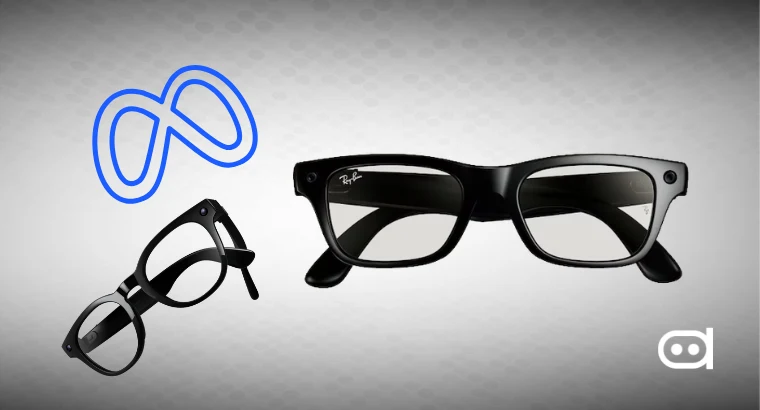
- Meta has announced the Ray-Ban Meta Blayzer Optics (Gen 2) and Scriber Optics (Gen 2), its first AI glasses designed specifically for prescription use. These come with lighter frames, overextension hinges, interchangeable nose pads, and optician-adjustable temple tips, starting at $499 in the US
- Preorders opened on March 31, through Meta and Ray-Ban directly, with retail availability in the US and select international markets set for April 14
- Alongside the hardware, Meta announced a suite of new software features for all Ray-Ban and Oakley Meta glasses which come with hands-free nutrition logging, WhatsApp summaries processed on-device with end-to-end encryption, neural handwriting with iMessage support, and pedestrian navigation expanding to every US city in May
Meta has been selling AI glasses since 2023. The problem it has not fully solved until now is that the majority of its potential buyers already wear prescription lenses every day, and a second pair purely for AI features is not a compelling ask. The Ray-Ban Meta Blayzer Optics and Scriber Optics, announced today, are built around that specific problem.
Both models are Gen 2 hardware. The Blayzer comes in rectangular frames in standard and large sizes; the Scriber is rounder. The technical accommodations for prescription use include overextension hinges, interchangeable nose pads, and optician-adjustable temple tips and details that indicate Meta and EssilorLuxottica went further than simply offering a prescription lens option within existing frames. Starting price is $499.
The Prescription Barrier Was Real
As you may know, smart glasses have run into a consistent adoption ceiling: most people who wear glasses do not wear sunglasses as their primary pair. The original Ray-Ban Meta lineup launched with stylish sunglass forms and was purchased primarily by a younger, style-conscious demographic. Prescription support was available but not the design priority.
That ceiling matters more as Meta tries to position AI glasses as a platform rather than a gadget. For the device to deliver features like real-time translation, navigation, and AI-powered food logging across a full day, the user needs to actually wear it all day. Prescription users are the demographic most likely to wear one pair of glasses from morning to night.
The ±6 prescription limit on direct Meta orders is the notable constraint. It covers the majority of prescriptions but not all, and routing complex cases through optical channels adds friction. Whether that limitation meaningfully narrows the addressable market will depend on how the retail partnership with independent opticians scales.
The Software Update Is Substantive
The hardware announcement arrives alongside a software rollout that expands what all Ray-Ban and Oakley Meta glasses can do, not just the new prescription models.
US users aged 18 and over will soon be able to log meals hands-free using voice or photos processed through the Meta AI app. This paves a direct path for health-conscious users who find manual food tracking tedious. WhatsApp message summaries and recall prompts are also rolling out to Early Access Program users, processed on-device with end-to-end encryption. Meta’s decision to handle this processing locally rather than in the cloud is a deliberate signal, given how the company has faced sustained criticism over privacy practices in its hardware products, and on-device processing for messaging data addresses that concern directly.
Neural Handwriting is expanding to include iMessage support, and pedestrian navigation is coming to every US city in May. The navigation feature in particular is one that prior reviews flagged as genuinely useful for urban users who want turn-by-turn directions without looking at their phone.
Also read: Apple Tests Multi-Command Siri Powered by Gemini-Derived AI
What It Means for the AI Wearables Market
Meta held 76.1% of global smart glasses shipments in 2025, according to Reuters. Google and Snap are both developing eyewear platforms, but neither has a product with Meta’s retail distribution or the Ray-Ban brand behind it.
For perspective, what Meta is doing with this launch is less about a hardware breakthrough and more about closing the adoption gap on its existing platform. The Blayzer and Scriber are not new AI capabilities, given that they run the same underlying stack as previous models. The advancement is that they can now be the glasses someone already needs, rather than an additional item they choose to carry.
Whether that framing converts prescription wearers who have never considered smart glasses is the question the April 14 retail launch will start to answer.