A home where people can live without lifting a finger is the ultimate vision the appliance industry has pursued for more than a century.
Samsung Electronics is taking a major step closer to bringing the dream home to life with its AI Home, an ecosystem that seamlessly connects devices and intelligently adapts to users’ needs.
At the center of this ecosystem is SmartThings, Samsung’s IoT platform and the core engine connecting devices within the AI Home.1 The service integrates with more than 4,500 models from over 380 partners,2 building a vast AI Home ecosystem. The number of home appliances connected to SmartThings has reached 33 million — up about 30% compared to the beginning of this year.3
Combining unmatched connectivity with ambient intelligence that understands and anticipates user needs, Samsung aims to create an AI-powered home that minimizes everyday chores and maximizes life’s possibilities through intelligent, connected appliances.
For the second interview in this four-part “Why Samsung” series, Samsung Newsroom spoke with Hyesoon Yang, Executive Vice President and Head of Multi-Device Experience (MDE) Strategy Team, Digital Appliances (DA) Business at Samsung Electronics, about how SmartThings is transforming daily living through AI Home innovation.

The Next Generation of Connectivity
Q1. Why has Samsung been building the foundation for a connected AI Home?
Home appliances were invented to reduce household chores and have continued to evolve for more than a century. Technology has eliminated much of that labor, but one challenge remains — creating seamless connections across the household journey, from washing to drying, food management to cooking and cleaning to air purification.
The first step toward solving this issue is achieving smooth device connectivity — and that’s exactly what SmartThings delivers. By enabling appliances and devices to communicate and operate in sync, SmartThings ultimately aims to free users from housework and help them enjoy a more effortless, fulfilling life.
Q2. What sets Samsung apart in enabling a connected AI Home?
Samsung home appliances connected through SmartThings go beyond their traditional functions, not only improving convenience by integrating devices but also advancing energy management and efficiency. As an open platform, SmartThings seamlessly connects with devices from global partners — allowing it to perform complex cross-device functions and gain a deeper understanding of the home through a network of sensors. Such high-level connectivity, along with the advanced interoperability of Samsung appliances, is what makes a truly intelligent AI Home possible.
SmartThings has grown rapidly, from 100 million global users in 2019 to more than 410 million as of July 2025 — a more than fourfold increase in six years. In Korea alone, the number of users has surpassed 23 million.4 Building on this foundation, Samsung’s AI Home delivers tangible benefits by simplifying daily routines (Ease), supporting loved ones (Care), helping users optimize their time and energy (Save) and protecting the home (Secure). Backed by unmatched connectivity and openness, this differentiated AI Home experience reflects Samsung’s distinctive advantage and fulfills the fundamental purpose of home appliances.
Less Chores, More Time
Q3. What are some benefits consumers can enjoy through Samsung’s connected platform and AI Home ecosystem?
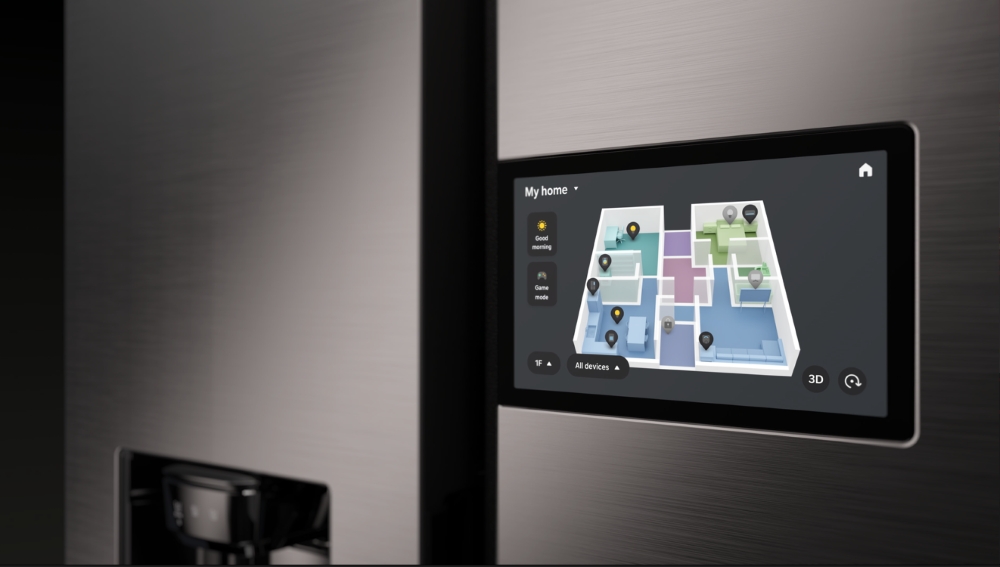
When a washing cycle finishes while users are watching TV, a notification appears in the upper-right corner of the screen — letting them check laundry progress. While cooking in the kitchen, users can turn on the air conditioner in their child’s room directly from the SmartThings-connected refrigerator display. With 3D Map View, users can monitor and control all connected devices through a three-dimensional layout of their home. The Away Mode feature in SmartThings automatically turns off lights and the TV when users leave — and even starts the robot vacuum to clean on its own.
Quick Remote is another convenient feature that lets users control their appliances directly from their smartphones.5 When a SmartThings-connected appliance is nearby, a pop-up automatically appears on the smartphone — allowing users to operate the device instantly without searching for a remote.
SmartThings also helps users save energy effortlessly. When AI Energy Mode is activated, it analyzes usage patterns to reduce energy consumption by up to 10% for refrigerators,6 70% for washing machines7 and 30% for air conditioners.8 Samsung is expanding this energy-efficient ecosystem globally through partnerships with companies like British Gas in the United Kingdom and CoolBlue in the Netherlands.
Q4. Beyond appliance control, how does SmartThings enhance family and pet care?
Housework is more than cleaning — it’s also about caring for one’s family and home. SmartThings-connected appliances now extend that care, helping users look after themselves, their families, their pets and their living spaces.
Family Care9 supports loved ones who live apart. If abnormal activity patterns are detected or a connected appliance has not been used for a certain period, SmartThings sends an alert prompting users to check in. Through the SmartThings app, users can also set medication schedules — sending smartphone reminders, dispensing the right amount and temperature of water from a connected purifier and even enabling home monitoring through a linked robot vacuum when no one is at home to check in.
Pet Care helps keep pets safe and comfortable while owners are away. On hot days, users can remotely turn on a SmartThings-connected air conditioner or check in on their pets through a home camera. If barking is detected, users can play soothing music through the robot vacuum or stream calming videos on the TV.
Connected through SmartThings, home appliances have redefined their role — evolving from simple household tools into intelligent companions that make daily life more convenient while caring for users and their families.
Ambient Intelligence — The Future of AI Home
Q5. What direction is Samsung taking with SmartThings and AI Home?
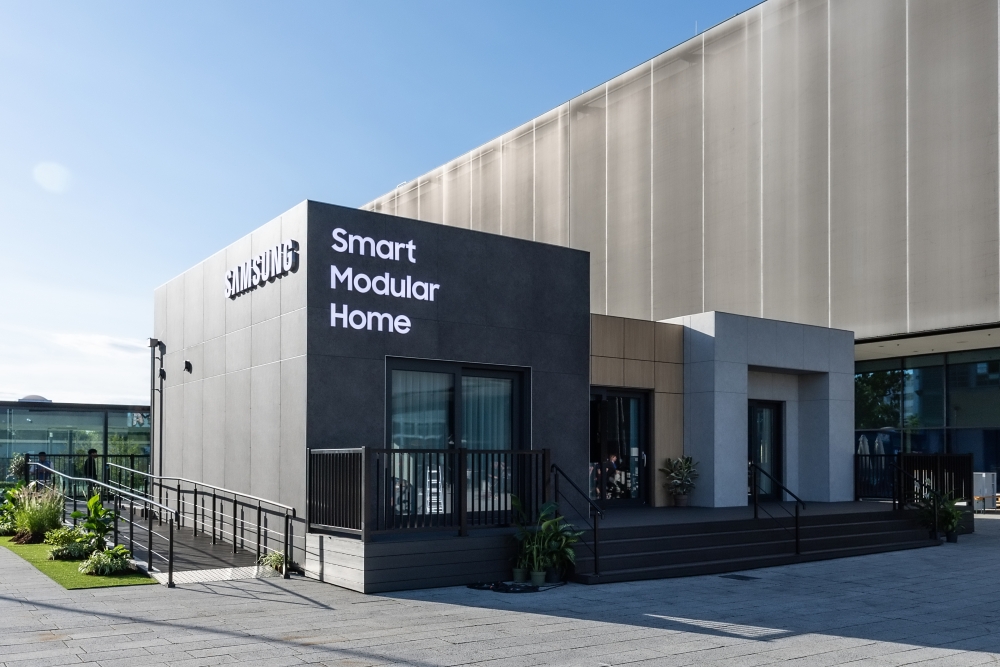
At IFA 2025, Samsung introduced the Smart Modular Home — a solution that allows users to experience the benefits of an AI Home from the moment they move in, demonstrating that the AI Home is no longer a vision of the future but a reality.
Additionally, Samsung is advancing ambient intelligence technologies that intuitively understand user context without being intrusive. By learning from and analyzing data across connected devices, the company aims to create a fully automated AI Home that understands users’ behaviors, preferences and routines. The overarching goal of SmartThings and AI Home is to become a true companion in every home — automatically adapting to each person’s lifestyle, freeing them from household chores and providing peace of mind.
None of this is possible without robust security. In the part three of the “Why Samsung” interview series, Samsung Newsroom will explore the company’s strengths and future direction in security.