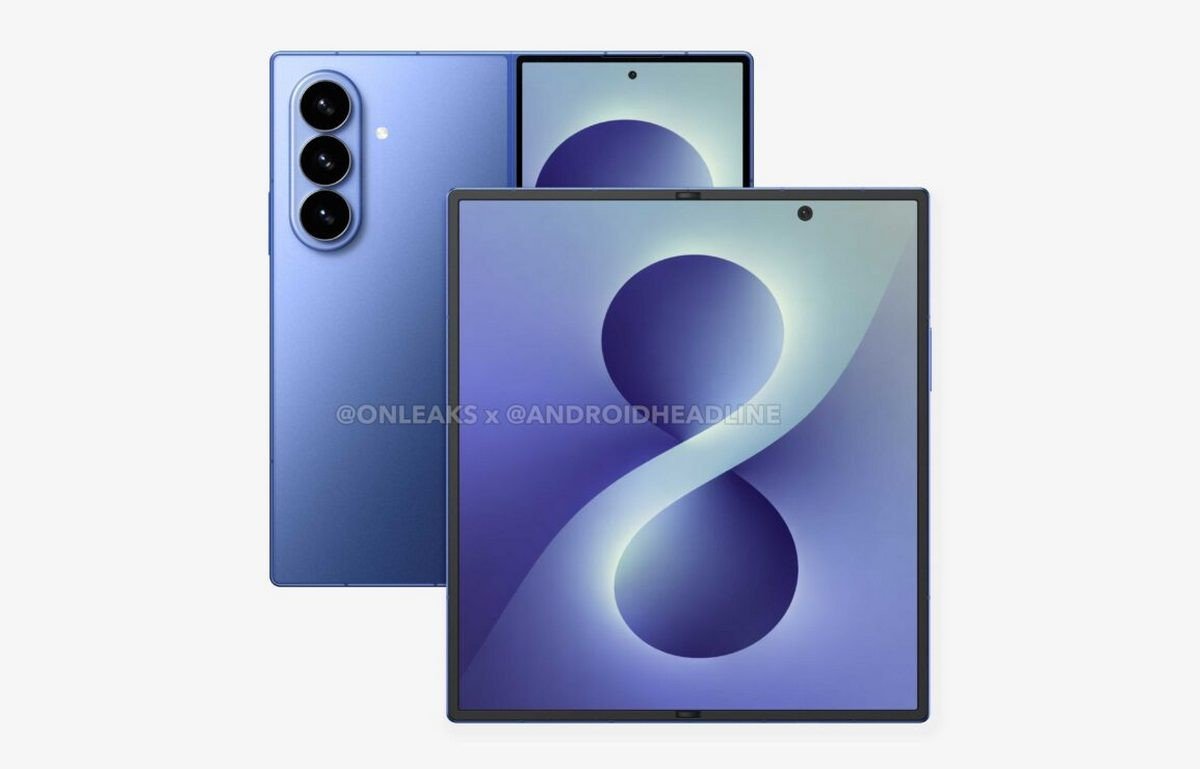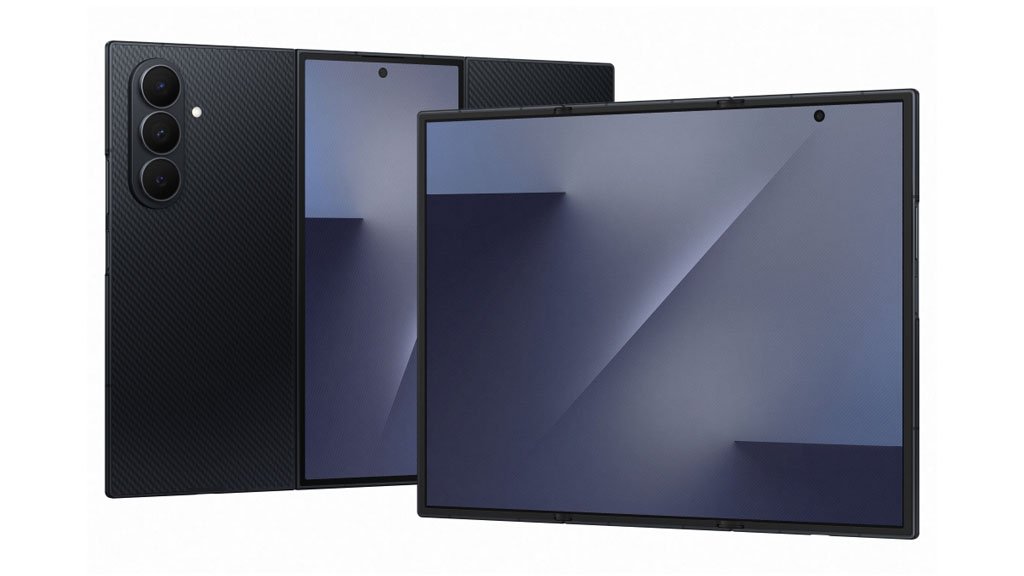
Huawei Mate XTs finally got a real competitor in the trifold game – Samsung Galaxy Z, and it’s time to check how the two iconic creations actually differ in terms of specs and features. The comparison is quite interesting, especially in hinges and screens.
Mate XT launched in September last year as the world’s first triple foldable smartphone. Meanwhile, Huawei once again took the field as the sole champion of the tri-fold device with the second-generation Mate XTs in September 2025.
But Samsung has finally ended Huawei’s supremacy with its first-ever Galaxy Z TriFold smartphone. After a silence of two years and teasers for more than a month, the company finally released its most-awaited product in the market.
And this is the perfect time to have a specs comparison between the Huawei Mate XTs and the all-new Samsung Galaxy Z TriFold phones. So without any ado, let’s go!
Table of Contents
- Display
- Dimensions
- Design
- Camera
- Battery Life
- Chipset
- Software and AI
Before proceeding with the comparison, note that the Samsung Galaxy Z TriFold will be the first in detail, while the Mate XTs triple foldable will follow the segment.
Display: Samsung Galaxy Z TriFold
- Main Screen: 10-inch Dynamic AMOLED 2x screen with 1600 nits peak brightness, 120Hz refresh rate, 269 PPI, 2160 x 1584 pixels resolution.
- Cover Screen: 6.5-inch Dynamic AMOLED 2x screen with 2600 nits peak brightness, 120Hz refresh rate, 422PPI, FHD+ resolution.
Huawei Mate XTs
- Main Screen: 10.2-inch OLED with 90Hz refresh rate, 1440Hz high-frequency PWM dimming, sampling touch rate of 240Hz, and 2232 x 3184 pixels resolution
- Cover Screen: 6.4-inch with a 1008 x 2232 pixels resolution + dual display of 7.9-inch with 2048 x 2232 pixels resolution
In terms of display, the Mate XTs is bigger than the Galaxy Z TriFold. But the one segment where it lags is the special shock-absorbing layer. It acts as a protective material over the display and protects it from drops, shocks, and vibrations.
Samsung also wins the game in refresh rate as the Mate XTs still relies on a 90Hz refresh rate, but the Galaxy Z triple foldable debuts with a 120Hz rate.

(Image Credits: Samsung)
Dimensions: Galaxy Z
- Folded: 159.2mm tall, 75.0mm wide, and 12.9mm thick
- Unfolded: 159.2mm tall, 214.1mm wide, and 3.9mm thick
- Weight: 309 grams
Mate XTs
- Folded: 156.7mm tall, 73.5mm wide, and 12.8mm thick
- Unfolded: 156.7.2mm tall, 219mm wide, and 3.6/4.75mm thick
- Weight: 298 grams
Overall, the devices differ slightly in terms of measurements. While the Mate XTs seems thinner, the Galaxy Z appears taller and wider when folded.
Design
Galaxy Z has a slim profile with an inward folding mechanism to shield the main display. The company has crafted the device with three most dynamic materials: Cornilla Glass for the screen, ceramic glass fiber reinforced polymer for the back, and an Advanced Armor Aluminum frame.
Samsung has further used a Titanium Hinge that ensures rigidity without increasing the bulk as well as making the opening and closing of the foldable super smooth.
Huawei Mate XTs has a geometric pulse construction on the camera with a parallel embossing of lines on the back. It has both a glass and a plain leather back version, wrapped in various beautiful colors.
Camera
This segment is a warzone for all devices, but Samsung and Huawei have their expertise in different sections, whether it’s photography, videography, or nightography.
Galaxy Z TriFold
- 200MP main camera with f/1.7 aperture, Quad Pixel AF, Optical Quality Zoom of 3x
- 12MP Ultrawide-angle with f/2.2 aperture and a 120-degree field of view
- 10MP telephoto with 3x optical zoom, f/2.4 aperture, 36-degree field of view, Digital Zoom up to 30X
- Front Camera: 10MP
Mate XTs
- 50MP super-zoom camera (F1.4-F4.0 10-stop physical variable aperture, RYYB, OIS optical image stabilization)
- 40MP ultra-wide-angle camera (F2.2 aperture, RYYB)
- 12MP periscope telephoto camera (F3.4 aperture, RYYB, OIS optical image stabilization)
- 1.5MP multi-spectral channels red maple primary color camera
- Front Camera: 8MP
While Huawei has yet to enter the 200MP camera, it offers something that Samsung doesn’t have – a multispectral sensor for incredible color accuracy. Meanwhile, both devices come with interesting photography features related to night shots, zooming, and more.

(Image Credits: Huawei)
Battery
On paper, the Galaxy Z TriFold has a 5600mAh battery. That’s the biggest battery phone in the Samsung family. Surprisingly, the capacity is the same as the Mate XTs: 5600mAh.
Though the change appears in the charging function. Samsung Galaxy Z supports a 45W wired and a 15W wireless. Whereas the Mate XTs supports a 66W Superfast wired, 5W wired reverse, 50W wireless, and 7.5W wireless reverse charging.
Chipset
Galaxy Z has a multi-core performance boost with the Snapdragon 8 Elite 5G chip, which is crucial for everything you do inside the device. Although we are well aware of the Huawei Kirin chip history. The Mate XTs equips the Kirin 9020 5G.
Software and AI
The Samsung Galaxy Z packs Galaxy AI that enhances multitasking. One can create three different portrait-sized apps side-by-side without interruption. It allows you to resize apps in multi-window to view the important details clearly.
Samsung DeX and Galaxy AI bring features like Photo Assist, Generative Edit, and Sketch to Image to offer most of the new triple foldable to users.
On the other hand, the Mate XTs debuts with HarmonyOS 5.1 and brings interactive themes, continuous translation, Celia Knowledge, and more. It also has a personalized color chart, AI-assisted composition, and Ultra HD Panoramic View for photos.
Bonus: Huawei Mate XTs has a stylus to ease multitasking and offer the best experience to users in every aspect.
The post Samsung Galaxy Z TriFold vs Huawei Mate XTs: Specs comparison appeared first on Huawei Central.