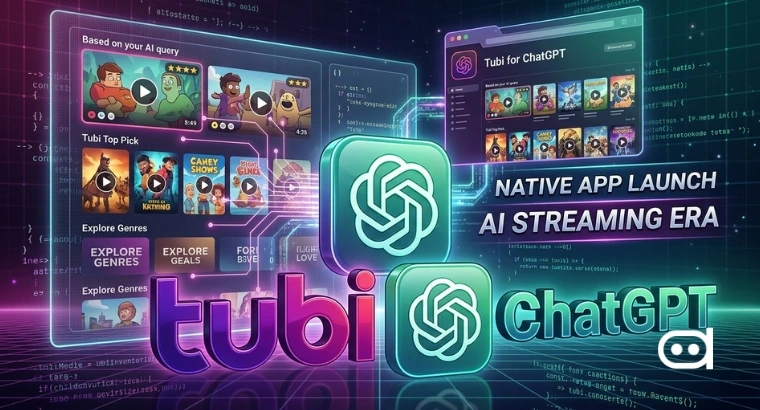
- Tubi has redefined how viewers access films and shows by introducing the first native streaming integration within ChatGPT.
- With the help of this rollout, audiences can receive tailored recommendations through natural language prompts and jump directly into playback.
- This development shows a broader transition toward AI-led interfaces as the next layer of content distribution.
The evolution of streaming has usually followed a similar path: more titles, smarter algorithms, and sleeker interfaces. But the latest step by Tubi suggests differently; the next leap will come from eliminating the need to expand libraries or refine layouts altogether. The platform embedded its experience within ChatGPT and positioned itself at the intersection of intent and access, where decisions are made rather than where catalogs are browsed.
This approach aligns with the constantly shifting digital habits. Interactions with technology are progressively increasing, conversationally, either through voice assistants or through AI chatbots. Tubi’s move, in this context, reflects readjustment or priorities: instead of only optimizing how content is displayed, it is focusing on how it is requested. The implication is simple; if users are able to explain what they want in a sentence, the interface would respond in the same way.
Endless Scrolling to Instant Solutions
Streaming platforms have relied on visual grids, autoplay, and recommendation rows to guide user choices for a very long time. These methods are effective, but can often overwhelm instead of assessing, especially as libraries grow larger.
Tubi claims that with the help of this system, users can simply describe their preference in natural language, whether it’s about genre, tone, era, or even something vague and receive suggestions that align with that request. Instead of matching keywords or relying only on previous history, the AI interprets intent in a broader sense which allows more flexible and subtle results.
Time spent in searching has been a friction point in streaming since very long, it sometimes leads users to abandon the process altogether. Tubi compressed that long journey into a short brief interaction and reduced hesitation by doing so, resulting in quick decision making. Surfacing the right content at the right moment becomes a critical differentiator for a service built around a wide ranging catalog rather than high-profile exclusives.
Who Controls this Discovery?
Beyond user experience, this combination reflects a structural shift in how streaming services might compete. Each platform has traditionally operated within its native environment and designed interfaces to retain attention and guide consumption. Collaborating with an AI-driven platform like ChatGPT, enhances the model’s capabilities by placing multiple services within a single conversational layer.
In a setup like this, importance is not controlled by homepage banners or curated rows, it’s dictated by how effectively a service can respond to user prompts. This could gradually give AI interfaces a more central role in shaping streaming habits. Any platform that resolves issues and mediates the interactions efficiently would have the tendency to become just as important as the platform that hosts the same content.
This shift could easily influence how content is produced and categorized. If conversational interfaces are the next default phase for entertainment, then traditional homepages would lose their relevance as users may have access to simply begin with a blank prompt to describe exactly what they want instead of being greeted by rows of curated thumbnails.
Also read: Google Gemini Can Now Import Your ChatGPT and Claude Chats
Wrapping Up
Tubi launching a native app within ChatGPT marks a shift in how digital experiences are structured and assessed; it is more than just a representation of a technical milestone in the entertainment industry. The removal of layers between intention and action points toward a model where users don’t have to adapt to interfaces, instead interfaces will adapt to users. AI continues to reshape interaction patterns to make it easier for users to choose what to watch, and this simplicity could redefine the competitive landscape of streaming.