Xiaomi has officially ends the MIUI software era, making way for its self-developed HyperOS software system. The company announced that it will no longer support the respective version for its devices after years of popularity in the overseas market.
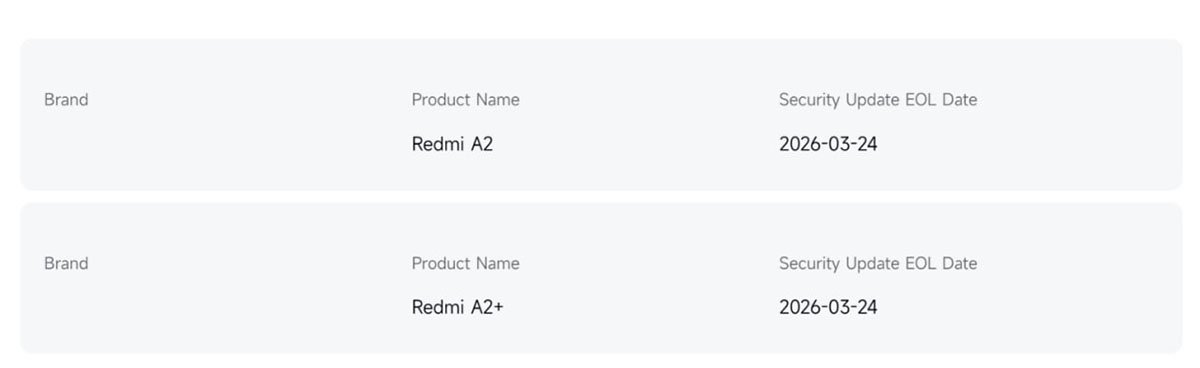
According to the official details, Xiaomi ends the MIUI chapter, marking a full stop on long-running software support. Though many devices are on the HyperOS system, two models have been relying on MIUI for the past two years.
These global devices are Redmi A2 and Redmi A2+. Both handsets were the only models to date sticking to the MIUI world. But in late 2025, the two smartphones received their final update based on Android 13 – MIUI V14.0.44.0 security patch.

(Image Credits: Xiaomi)
MIUI has been alive for 12 years and delivered 14 versions. During this amazing period, the company introduced various magnificent features for its device users.
Second Space, Dual Apps, Full Screen Display, Nature Sounds, and more were some of the top capabilities of MIUI that even impressed other brands to follow suit.
However, MIUI 14 became the highlight version as it was the pure MIUI build. It not only reduced the firmware size but also prepared the software system as a leaner architecture for users, offering a minimalistic user interface on its devices.
MIUI’s end leads to a strategic rebirth. HyperOS not only supports phones and tablets but also smart vehicles, where MIUI didn’t seem sufficient. It uses native Snapdragon 8 Elite integration, system-wide Hyper AI, and a Vela architecture, which resulted in a major software evolution in the Xiaomi world.
As of now, HyperOS 3.1 is on its way to bring a refined notification bar (Hyper Island), native generation AI tools for photo editing + real-time translation, and XRING 01 connectivity.
It would be interesting to see how far the new software approach will benefit Xiaomi.

(Image Credits: Xiaomi)
The post Xiaomi officially ends MIUI era, clearing way for HyperOS appeared first on Huawei Central.