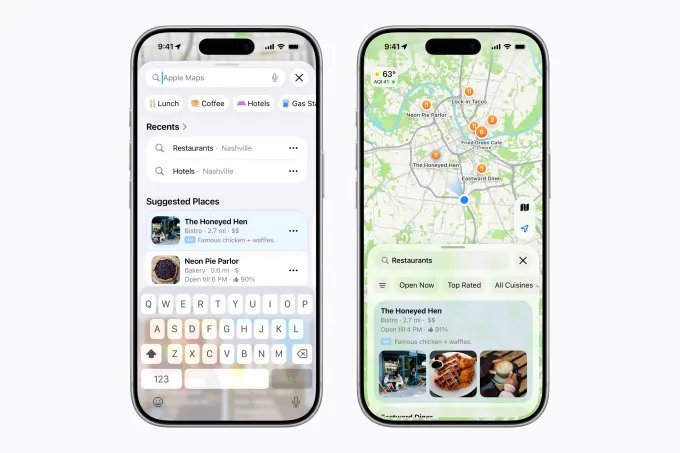
Apple has quietly published a rulebook for its new Maps ads, revealing a more curated approach than advertising giant Google.
The iPhone maker has not disclosed a launch date for Maps ads, which was announced earlier this year, beyond saying they would arrive “this summer” in the U.S. and Canada. However, the company has published advertiser documentation and Maps-specific ad policies, suggesting the rollout is approaching.
In a newly published Apple Advertising Services policy, effective as of July 14, 2026, the iPhone maker shares its rules for advertising on Apple Maps. Notably, it prohibits the broad category of home services businesses, like plumbing, electrical, locksmith, HVAC, pest control, roofing, and general contracting services, among others.
That sets Apple apart from Google, where Local Services Ads are one of the company’s largest local advertising categories. Apple’s policy suggests the company is initially limiting its ads to places with a physical presence that their customers actually visit.

This approach could help make Apple’s ads feel more like organic map listings, rather than traditional paid search ads.
It could also save Apple some headaches as it gets its Apple Maps ads off the ground. Home services businesses, including locksmiths and garage door service providers, often require additional verification. Google, for instance, allows these categories, but requires initial verifications, follow-ups, and audits to remain in good standing.
Apple’s curated approach to its App Store is also spilling over into its newest advertising vertical. In addition to banning home services, the policy prohibits a handful of businesses from advertising on Maps, like cryptocurrency ATMs and bail bonds providers.
Apple is also taking a hands-on approach to approving ads for businesses offering medical services, as the policy notes these ads will be “evaluated on a case-by-case basis.”
These restrictions appear in a dedicated section of the new “Apple Advertising Services
News and Stocks, Maps, and Sports Programming Policies,” which details the rules around publishing ads across Apple’s first-party apps beyond the App Store.
The broader policy also prohibits deceptive or profane ads, political ads, and ads featuring weapons, violence, controlled substances, defamatory material, and more.
Although Apple may expand to other ad categories over time, its initial approach positions Maps and its ads as a more curated, navigation-focused product, rather than an extension of a web search engine.
Apple’s approach to displaying ads will also differ from Google; Apple said it would only show a single ad to users in its Maps search results. It noted that the advertised businesses would be clearly marked with a small blue halo around the pin, and labeled as an ad in the list of Suggested Places.
Apple also said that data about the ads that users interact with stays on the device and is not collected by the company or shared with third parties.
Another recent update to Apple’s Advertising Services Terms of Service also suggests that Apple could be planning to expand its Apple Apps to non-Apple-owned services, a report from Mobile Dev Memo noted. Apple has not confirmed any changes on that front, however.
When you purchase through links in our articles, we may earn a small commission. This doesn’t affect our editorial independence.