Xiaomi is rolling out new display improvements to some older devices with HyperOS 3.0 upgrade. The company is reportedly adding a new “anti-blur-in algorithm” to some previous-generation models in order to prevent the screen from fading over time.
HyperOS 3.1 is making its way to top-end models in the home ground and global market. The company will soon expand this software version to more eligible models.
But in the meantime, Xiaomi has picked up the right solution for some of its old devices and is pushing display improvements to them through the HyperOS 3.0 upgrade.
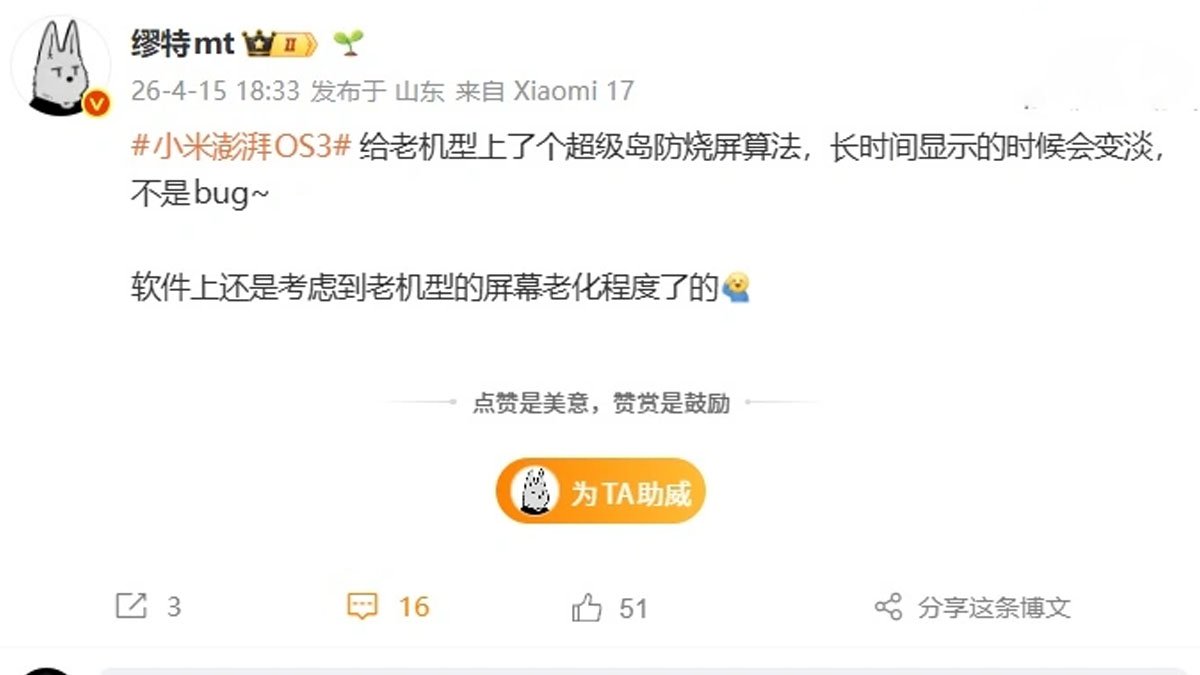
According to a Weibo tipster, Xiaomi is now implementing a Hyper Island anti-burn-in algorithm to older devices. This move will avoid the screen ageing even after prolonged use. Describing the details, the tipster added in its post:
“#Xiaomi HyperOS3# has added a Super Island anti-burn-in algorithm to older models. The screen may fade after prolonged display, but this is not a bug. The software design takes into account the screen aging of older models.”

(Image Credits: Weibo)
Screen fading generally refers to a burn-in or image retention problem, where the static UI elements, like the status bar or navigation tabs, remain visible even after the display changes. This usually happens after 18-24 months of high-brightness usage.
Often Xiaomi phones face this issue. But the company is introducing this solution to previously released devices, increasing their durability to a greater extent.
Following the leak, when a user asked if the new Xiaomi phones have this feature as a built-in addition, the tipster responded that the latest ones do not need it for now.
The post HyperOS 3 bringing display improvements to older Xiaomi phones appeared first on Huawei Central.