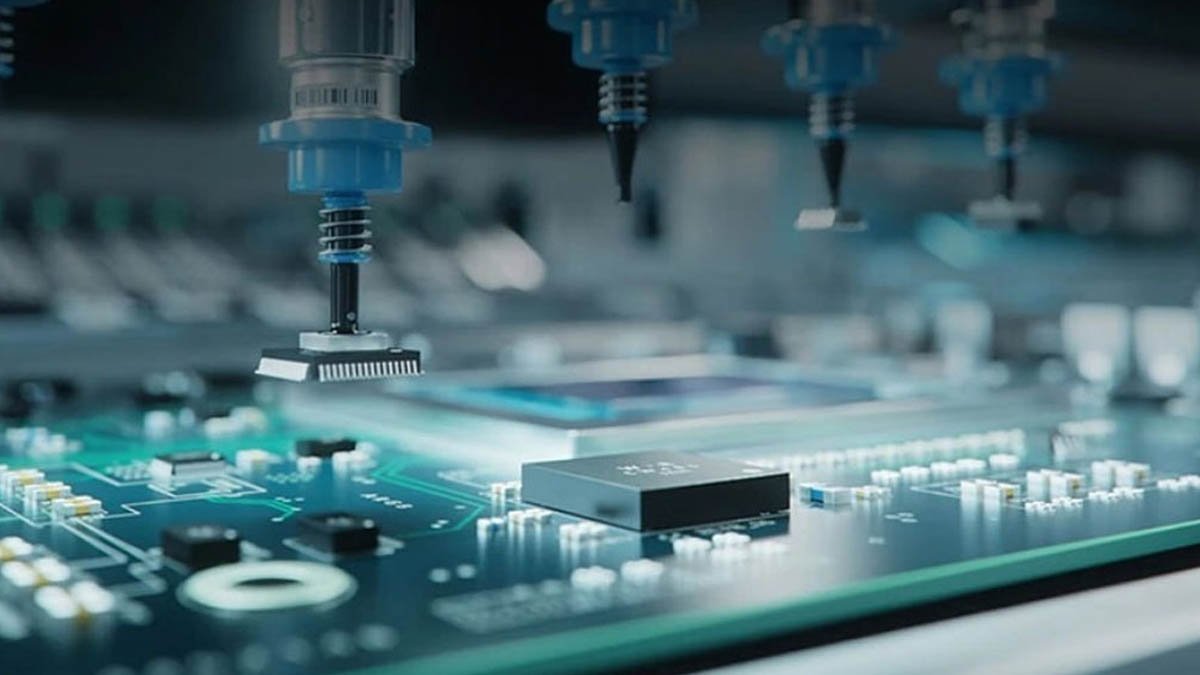
Huawei has recently released the Tau Law V2 paper, revealing additional and surprising details about the Mate 90’s Kirin chip. As per the company, the upcoming mobile SoCs will be based on Tau Scaling Law and LogicFolding for a performance boom.
The tech giant will unveil the Mate 90 series this fall and ahead of that, it has started dropping clues on what changes its 2026 Kirin chip will bring over the previous versions.
According to the information, the Huawei Mate 90’s Kirin chip will be based on the Tau Scaling Law. Instead of using long-running Moore’s Law, the OEM is up with its own solutions that don’t require advanced processing nodes or chipmaking tech.
LogicFolding is the first solution. It is a chip design concept Huawei will use for the 2026 Kirin SoC. It can increase the transistor density by 55% over the 9030 Pro.
Moore’s Law used to shrink the transistor size and took three years for better geometric scaling to deliver slight improvements. Hence, the company turned towards a topological reorganization of the spatial distribution of logic.
The Kirin 2026 chip can operate at 25°C temperature with 0.9V voltage and can reduce the overall power consumption by 41% over the 9030 Pro mobile SoC. You can check certain internal differences between the upcoming and existing chips HERE.
Tau Law will further shorten the distance that signals travel by cutting off the wire length by 30%, reducing the clock-buffer count by 50%. He Tingbo – the President of Huawei Semiconductor Unit, says LogicFolding will further evolve over the next decade from a crucial path to a full-scale multi-layer folding concept. She adds:
“Many open questions remain, and no single organisation can address them alone. The toolchain, the standards, the benchmarks, the device physics, and the economic models all require contributions from beyond any one company.”

(Image Credits: Huawei)