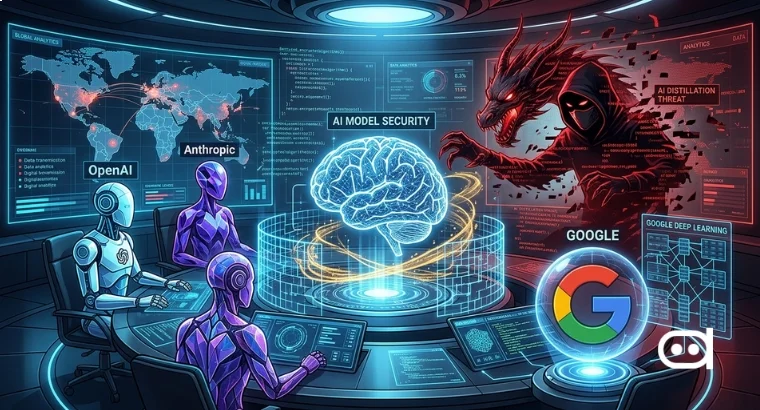
- Allegations of replicating capabilities of Western artificial intelligence models have brought China’s AI startups like DeepSeek, Moonshot AI, and MiniMax into focus in 2026.
- Reports from OpenAI, Anthropic, and Google suggest that their systems may have been used to train competing models by running large queries on them.
- Coverage by Forbes and BusinessToday frames the issue as a part of larger global AI competition.
This later dispute in the artificial intelligence industry shows how easily and quickly innovation can twist and question ownership and fairness. While artificial intelligence labs are pushing the boundaries of large language models and their capabilities, concerns of these very same capabilities being replicated across borders are still there. The situation remains complex and unresolved; though some of China’s fastest-rising artificial intelligence firms are under observation.
At its core, this is a reflection of intensifying global competition and not just a technical issue anymore. The companies involved, on both sides of the dispute, are operating at the frontier of artificial intelligence development, where rules are still evolving. The main focus is on Chinese startups using existing systems from Western companies to speed up their advanced artificial intelligence development tools progress.
Leading artificial intelligence companies like Anthropic, and OpenAI believe that their models might have been used extensively by others to generate large amounts of data. But, it is important to understand that these are just allegations for now, there is no final proof or legal decision confirming any company’s wrongdoings.
What is AI Distillation and Why is it a Threat?
AI distillation is a normal method used in machine learning. It basically means gathering knowledge from powerful, large artificial intelligence models and using it to train smaller models. Companies often do this with their own systems to save time and resources.
The issue here is that this method is being used with someone else’s model. Reports claim that some companies have asked a very large number of questions to artificial intelligence systems made by Anthropic and OpenAI. The answers received, could be used to train their own AI models.
If the system is publicly available, then asking questions to an AI is not unusual; but doing it on a very large scale with the intention of using its data for personal AI models, will definitely raise concerns about fairness and ownership. Still, nothing has been officially proven yet.
Also read: Kimi AI’s Rise: How China Is Competing in the AI Assistant Market
Competition & Control in AI Race
DeepSeek, Moonshot AI, and MiniMax are private setups funded by investors and are currently trying to compete in the global market. There is no indication that these companies are owned or directly controlled by the Chinese government.
Artificial intelligence has become a strategic priority worldwide, so private companies can potentially carry national significance by their advancements. This is one major reason behind companies like OpenAI and Anthropic taking these concerns seriously and working together more closely.
This situation ultimately highlights a broader question facing the industry: how does one balance innovation and safeguards against potential misuse of its openness? The boundaries of what is called “acceptable” are likely to be tested more frequently as the capabilities of artificial intelligence systems gradually increase.
Wrapping up
Overall, this situation highlights the challenges of artificial intelligence, a fast-paced and highly competitive industry. The companies alleged are private setups and the claims against them remain unproven. What comes out of this situation is that there’s a mix of competition, innovation, and concerns around fairness and ownership. As artificial intelligencegradually evolves, disputes like these are likely to become more common. The way companies, regulators, and researchers respond to these disputes will play a crucial role in shaping the norms and expectations that lead the future of artificial intelligence development.